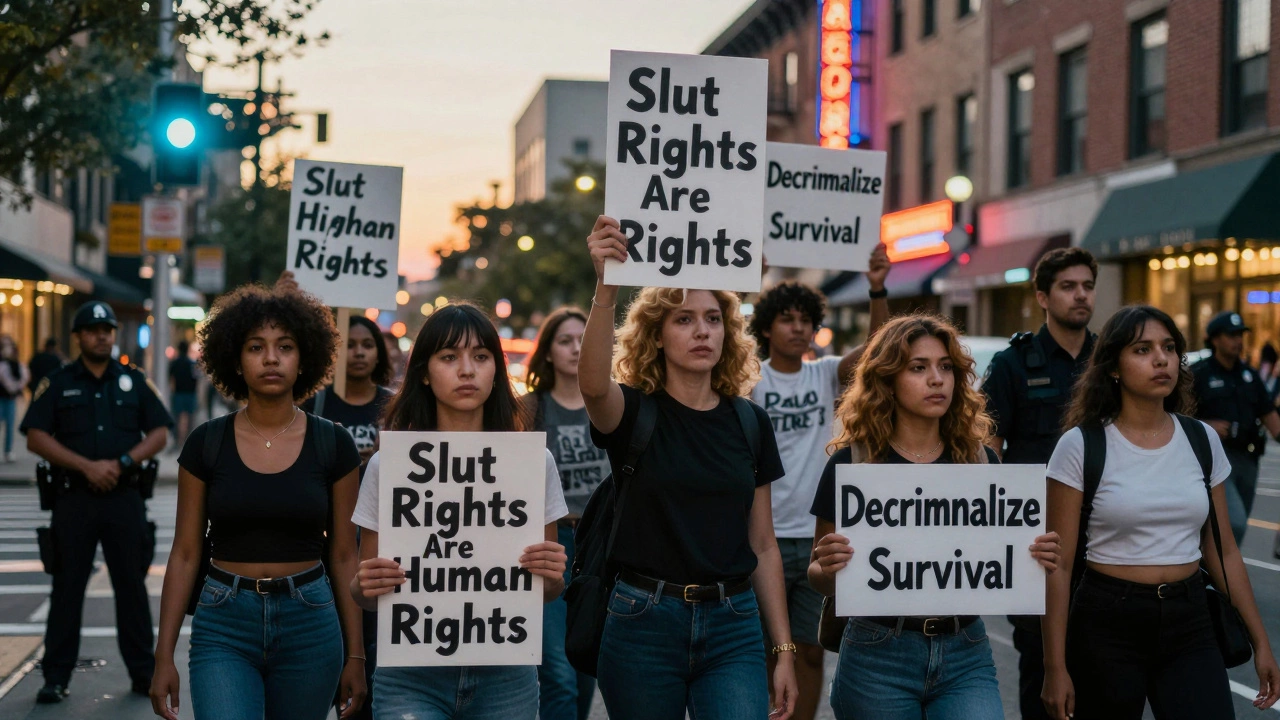
When someone says sex worker rights are slut rights are your rights, they’re not being poetic-they’re stating a fact about power, control, and who gets to decide what bodies are allowed to do. This isn’t about fantasy or fetish. It’s about survival, dignity, and the right to exist without shame or punishment. The idea that selling sex is somehow less human than selling haircuts or software is a lie built on centuries of moral panic. And it’s a lie that gets people arrested, deported, beaten, and killed.
Every time a woman is called a slut for having multiple partners, or a trans person is denied housing because they’re suspected of doing sex work, or a migrant worker is threatened with deportation for accepting money for sex, we’re all losing. That’s not just their problem. That’s the same system that tells you your body is public property when it’s convenient for someone else. If you’ve ever been shamed for your sexual choices, your clothing, your relationship status, or your gender expression-you already know how this works. The same judges, cops, and politicians who criminalize sex workers are the ones who police what women wear to work, who gets to be pregnant, and who can say no. milf escort dubai might sound like a search term from a different world, but the people behind those ads are fighting the same legal systems that criminalize survival in every city on earth.
Why ‘Slut’ Isn’t a Insult-It’s a Political Label
The word ‘slut’ was never meant to describe behavior. It was designed to control it. In the 1970s, feminist groups like SlutWalk began reclaiming the term not to celebrate promiscuity, but to expose how easily society turns sexual autonomy into a crime. A woman who sleeps with five people in a year is a slut. A man who sleeps with five people? A stud. A sex worker who sleeps with five people a day? A criminal. The math doesn’t change. The punishment does.
Decriminalization isn’t about making sex work glamorous. It’s about removing the legal tools that let predators thrive. When sex work is illegal, workers can’t report rape. They can’t get bank accounts. They can’t rent apartments. They can’t access healthcare without fear. When they’re forced underground, they’re forced into dangerous situations with no legal backup. That’s not protection. That’s abandonment dressed up as morality.
The Real Danger Isn’t Sex Work-It’s Criminalization
Look at countries that have decriminalized sex work. In New Zealand, since 2003, sex workers have reported fewer violent incidents, better access to health services, and higher rates of reporting abuse to police. In Germany, after partial decriminalization in 2002, HIV rates among sex workers dropped by 40% within five years. Why? Because when you remove the law as a weapon, you make space for safety. Workers can screen clients, negotiate prices, and work together. They can carry condoms without fear of them being used as evidence. They can call a friend when something feels off.
Meanwhile, in places where enforcement is strict-like the U.S., Australia, and parts of Asia-sex workers are still being arrested for solicitation, even when they’re not doing anything illegal. In Melbourne, a 2024 report by the Victorian Sex Workers’ Union found that 72% of workers had been stopped by police in the past year, not for breaking laws, but for being visibly present in public spaces. That’s not law enforcement. That’s harassment with a badge.
Who Benefits From Keeping Sex Work Illegal?
Not the public. Not the workers. Not even the so-called ‘rescuers’ who run anti-trafficking campaigns that end up shutting down safe spaces. The real winners are the people who profit from the chaos: landlords who rent to sex workers at inflated rates, pimps who take advantage of criminalized labor markets, and tech companies that profit from ads targeting desperate people. And let’s not forget the porn industry, which profits from the same stigma that paints sex workers as ‘dirty’ or ‘desperate’-while paying its performers pennies and hiding behind ‘consent’ disclaimers.
When you hear someone say, ‘I don’t support sex work, but I support the people,’ they’re often saying, ‘I want to feel good about myself without changing the system.’ That’s not solidarity. That’s performative pity. Real solidarity means demanding the same rights: safe housing, fair wages, legal protection, healthcare access, and freedom from police violence.

How This Connects to Everyone
Think about the last time you were told to ‘dress modestly’ to avoid attention. Or when a woman was blamed for being assaulted because of what she wore. Or when a man was ridiculed for crying in public. These are all parts of the same machine: controlling bodies to maintain social order. Sex workers are just the most visible targets.
If you believe your body belongs to you, then you must believe every body does. If you think someone should be free to say no to sex, then you must also believe they should be free to say yes-without being punished for it. If you think a person shouldn’t be jailed for being poor, then you can’t support laws that punish people for turning to sex work because they have no other options.
It’s not about whether you agree with sex work. It’s about whether you believe people should be free to survive without being criminalized for it.
The Myth of the ‘Rescued’ Sex Worker
There’s a dangerous narrative that every sex worker is a victim who needs saving. That narrative ignores the fact that many sex workers choose this work because it pays better than their other options. It ignores that some workers are students, single parents, artists, or retirees. It ignores that many workers are happy, healthy, and in control of their lives.
When NGOs and governments push ‘exit programs’ that force people into low-wage jobs with no support, they’re not helping-they’re replacing one form of exploitation with another. Real support means housing, childcare, mental health care, and job training-not moral lectures and police raids.
And if you think all sex workers want to leave the industry? Ask them. Don’t assume. Don’t speak for them. Listen.

What You Can Do
You don’t need to become a sex worker to support sex worker rights. You don’t need to understand every detail. You just need to stop supporting systems that hurt them.
- Donate to sex worker-led organizations like SWOP (Sex Worker Outreach Project) or Scarlet Alliance in Australia.
- Call out police harassment when you see it. If you’re in Melbourne and see a worker being stopped by police, ask if they need help. Record it if it’s safe.
- Support laws that decriminalize sex work, not ‘end demand’ laws that punish clients and make workers more vulnerable.
- Don’t use terms like ‘prostitute’ or ‘hooker.’ Use ‘sex worker.’ Language shapes reality.
- Amplify the voices of sex workers. Share their stories. Don’t speak over them.
And if you’re reading this because you’re curious about what happens in places like Dubai-don’t turn it into voyeurism. The fact that someone might search for happy ending dubai or dubai marina escort doesn’t make those people monsters. It makes them human, trying to find connection, comfort, or relief in a world that offers little of either. The real question isn’t why they’re searching. It’s why the system makes them feel like they have to.
It’s Not About Morality-It’s About Power
Sex worker rights aren’t a niche issue. They’re a mirror. They show you how society treats people who don’t fit the mold. They show you who gets to be safe, who gets to be respected, and who gets to be ignored.
When you fight for sex worker rights, you’re fighting for your right to be who you are without fear. For your right to make choices about your body. For your right to be seen as whole, even if you’re messy, tired, broken, or bold.
Slut rights. Sex worker rights. Your rights. They’re not separate. They’re the same fight.